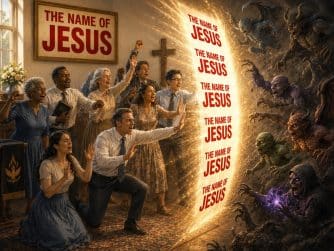



Psalm 9 is a song of thanksgiving for vindication. Ascribed to David, this psalm’s aim is giving praise to the Lord for the manifestation of His righteousness in judging wicked nations. Will wickedness prosper for all time? Or is it soon coming to an end? The ultimate overthrow of the wicked and the end of their opposition is not only our comfort, but a guarantee, because God is still on the throne! Join Carl now to learn more about this beautiful psalm and the promises it holds for you personally…
Here is a complete transcript of the podcast…(below)
Friend, I want to welcome you to another exposition of the Psalms. And here today we have Psalm 9. The psalmist opens this praise psalm with the intent to praise Jehovah God for his works. He then recounts God’s deliverance from enemy nations, and describes his just and righteous rule over the earth. That’s verses 7 through 10. He praises Jehovah for remembering the afflicted, and petitions Jehovah to remember the psalmist’s affliction. The psalmist then celebrates Jehovah allowing the destruction of the wicked, and Jehovah’s preservation of the needy. The psalmist, who in this case is David, concludes with a petition for Jehovah to judge the nations. And let me now read it to you in its entirety… Verse 1.“I will praise you, O Lord, with my whole heart. I will show forth all your marvelous works. I will be glad and rejoice in you. I will sing praise to your name, O Most High. When my enemies are turned back, they shall fall and perish at your presence. For you have maintained my right and my cause, you Satyrs, in the throne, judging right. You have rebuked the heathen. You have destroyed the wicked. You have put out their name forever and ever. O thou enemy, destructions are come to a perpetual end, and you hast destroyed cities. Their memorial is perished with them. But the Lord shall endure forever. He hath prepared his throne for judgment. He shall judge the world in righteousness. He shall minister judgment to the people in uprightness. The Lord also will be a refuge for the oppressed, a refuge in times of trouble.
And they that know your name will put their trust in you. For you, Lord, have not forsaken them that seek you. Sing praises to the Lord which dwell in Zion. Declare among the people his doings. When he makes inquisition for blood, he remembers them. He forgets not the cry of the humble. Have mercy upon me, O Lord. Consider my trouble which I suffer of them that hate me. You have lifted me up from the gates of death that I may show forth all your praise in the gates of the daughter of Zion. I will rejoice in your salvation. The heathen are sunk down in the pit that they made. In the net they hid is their own foot taken. The Lord is known by the judgment which he executes. The wicked is snared in the work of his own hands. Hegion, Selah. The wicked shall be turned into hell and all the nations that forget God. For the needy shall not always be forgotten. The expectation of the poor shall not perish forever. Arise, O Lord, let not man prevail. Let the heathen be judged in your sight. Put them in fear, O Lord, that the nations may know themselves to be but men. Selah. “
Psalm 9 is a song of thanksgiving for vindication. Ascribed to David, this psalm is set to the tune of the death of the son. In the psalm, David praised the Lord for the manifesting of righteousness, his righteousness in judging wicked nations, and for being a true and eternal judge in whom the afflicted may trust. David then praised that God would give him further cause for praise by seeing his affliction and removing it from him. The ultimate overthrow of the wicked and the end of their opposition is not only our comfort, but as stated in verses 5 through 6, God is still on the throne. Amen. David first imaginatively takes his stand in the day of judgment in verses 3 through 4, and using past tenses, records the rout of his enemies and his own vindication, whereas in the matching verses of 7 through 10, he looks forward to the work of the same reigning Lord. The first portion of this psalm, verses 1 through 12, speaks of God as the true judge and the hope of the afflicted. In view of this, David resolves to praise him wholeheartedly, to tell of his wonders, to be joyful in God, and to sing to him. Wonders, the term wonders is used frequently of God’s work in the psalms. The cause for David’s praise is recorded in verses 3 through 6. The Lord manifested his righteousness by vindicating David’s cause. His enemies were turned back. They were rebuked and destroyed.
And that’s because David was a worshiper friend. He praised and worshiped God, and that brought God on the scene and infused the covenant that he made with Jehovah God. Even the name of the nations, mentioned in verses 15 through 20, was blotted out. Such a description vividly portrayed their defeat. Not even their name would be perpetuated. Memory of them was destroyed after cities were demolished. All of this, David wrote, was evidence that God upheld his cause and rules righteously from his throne. And considering today, Israel has been reborn since 1948 and is flourishing, that fig tree that was promised to be rebirthed is upheld. Its name will be held in perpetuity, but the nations that came against Israel have fallen. Verses 7 through 10, on the basis of the deliverance spoken of earlier, David declared that the Lord is a true and eternal judge and a fortress for the afflicted. The psalmist’s praise, at first, was directed to the Lord and his eternal reign over the earth. Then David applied that truth to people’s needs. The afflicted and the oppressed, those who are most frequently ignored or abused by human judgment, are championed by the righteous judge, and thank God for that. The Lord God is our refuge and stronghold in times of trouble. This word stronghold, misgob, used twice in verse 9 and 12, is both a stronghold and refuge, suggesting security and protection in a high safe place of retreat.
Many times these retreats, or refuges, rather, were on a high point. And if you know the castles of Wales, certainly where I grew up, these castles were strategically placed on pivotal mountains so that the attacking marauders would have great difficulty taking that fortress. And that is where God resides. He is on most high, looking down on his enemies. Another Hebrew word translated refuge in the Psalms is mehesh. Shelter from danger is what it means. We can trust in him, knowing of God’s security and protection when we run to his refuge. Verses 14 through 21 comprises an appeal for and reflection on justice. The gates of death are contrasted with the gates of door to Zion, so that justice is the door to life, injustice to death. Because the gates of death were firmly closed forever, does the psalmist also imply eternity for life with God? Not clearly, but these institutions prepare for such a theological development. Verse 17 includes two Hebrew words difficult to translate. Hegeon, the first implies meditation, the accompanying sound of a harp, and the movement of the heart itself. The second word probably indicates a pause, a silent reflection on that which is spoken. And it talks about vengeance in verse 12. There was a need for the family to avenge the wrongdoing against their own clan.
This was a tribal right to avenge any of the kin that were slain. This is the avenger of blood, but God is the ultimate avenger of blood, and he is our vindicator friend. We are to resist that temptation to take matters into our own hands. And then in verse 13 is a mention of the gates of death. The netherworld Sheol was believed to be an earthly city, and that it contained houses and even a city wall, primarily to keep in its inhabitants. In the descent of Ishtar, the netherworld was a gate complex with seven gates and gatekeepers at each one to control access. In Egyptian iconography, the gates of death are portrayed as gateways into the necropolis. Yet regardless the intricate descriptions the heathen might have of the gates of death, hell is real, friend. It is the abode of the lost. Whether it’s Hades, the holding place for the unredeemed until Christ returns, or the eternal lake of fire, which is the destiny for the false prophet, the Antichrist, and all of the redeemed, it matters not. Whether it be Hades or Gehenna, this is somewhere you do not want to go. And this word hegeon in verse 16 means meditation, as I’ve said.
It’s a pause for solemnity and emphasis, and it only occurs in this psalm, so it’s very unique in that regard. But praise in this psalm in verses 11 through 12 is a reminder of exhortation to the people, especially those who are afflicted, whom God does not ignore. Those who are afflicted should worship, and that turnaround will take place. I’m thinking of Jehoshaphat, a worshiper. When he started seeking God and worshiping, and sending the worshipers to the front line of the army of the Lord, he had protection, security, and refuge, and he watched his enemies scatter before him. It is interesting to note that the city’s tribes and enemies of ancient Israel have now perished from history. They are only memories. The God of David lives on, and Israel survives as a nation among the nation, and there also will be a lineage that will extend into the millennial reign, as those Jews will continue. Now God at various times, friend, has sent judgment, whether it be through men or whether it be through weather. I’m thinking of the flood of Noah. I’m thinking of the destruction of Sodom, the destruction of Babylon. I’m thinking of the numerous times where God judged even his own people in 70 AD via the Romans.
There was more judgment through time because Israel was not faithful to the covenants and statutes that the Lord put in place, and he warned them of that many years prior, especially in Deuteronomy 28, so no one else can be blamed except themselves, sadly. But we too, friend, will be judged at the Bema judgment seat of Christ. It talks about that in Revelation 11, 18, and 2 Corinthians 5, 10. We, of course, are already redeemed. Our works will be judged in the sense that our reward will be based on what we do because we’re already redeemed. However, for those at the great white throne judgment spoken of in Revelation 20, verses 11 through 15, their unrighteous works will be judged, and they will be found unworthy, and they will not gain access into heaven because their names are not written in the Lamb’s book of life. Then the world will be judged at the final judgment mentioned in Revelation 20, verses 11 through 15. And friend, it has to be brought to attention here of the shedding of innocent blood, and that’s in verse 12. It started out with Cain slaying Abel and him being banished with a mark, and this word blood in verse 12 is in plural form. It’s bloods, meaning God remembers the shedding of innocent blood over many lineages. He has not forgotten the shedding of blood throughout the ages, and he initiates judgment against people who shed innocent blood, whether it’s in the womb, whether it’s people who are alive, and recently Britain has actually sanctioned the abortion of children up to the day of their birth. And friend, if that doesn’t want to make you vomit, I don’t know what does.
My nation is going into complete apostasy, and I am very concerned about it, and we need to up prayer for Great Britain. And in verse 14, it talks about rejoicing in salvation, and that word salvation in the Hebrew is Yeshua, which is a Hebrew form of the name of Jesus. So only salvation can be found in Jesus Christ. And then in verse 18, there’s mention of the poor, and the poor are overlooked. But it’s interesting to note in Luke 4.18, Jesus said he’s come to preach the gospel to the poor. Christ gave this message at the Sermon on the Mount. Blessed are the poor in spirit, for theirs is the kingdom of heaven. There’s mention of a feast in Luke 14.13, of the poor, the maimed, the lame, and the blind being called. Christ observed the poor widow woman who gave two mites. During the time of the early church, the saints gave offerings for the poor in Romans 15.26. In Galatians 2.10, Paul reminds the Galatians to remember the poor. If God cares for the poor, we should too. And that is something that, you know, with the welfare system and the homeless on the streets, we think, oh well, you know, if they could only get a job, and they don’t need to sit on the street, and it’s their fault.
And you know, friend, people can become homeless very quickly. A certain set of events could occur. You lose your insurance. You have massive medical bills. You lose your job. One or two consequential events, and you too could become homeless, and it’s only by the grace of God that you have not. So, thank him for that. But we must be caring of the poor and their needs. And the church should have outreaches for the poor, and give a certain amount of funds to people in need, as part of the offering, not the tithe, of course. So friend, that is Psalm 9 in a nutshell. We are wrapping this up. We give God the glory for these beautiful Psalms that were sung, often with harp, and recited by David, and they were given by divine inspiration. Though David penned these words, they were given by inspiration from God himself. Friend, until tomorrow. Good night, God bless, and remember to spread the good news.
Title- Psalm 9: The wicked shall not prosper
https://carljosephministries.com/podcast/psalm-8gods-crowning-achievement/
https://truthaccordingtoscripture.com/commentaries/spe/psalms-9.php
Bibliography:
John D. Barry et al., Faithlife Study Bible (Bellingham, WA: Lexham Press, 2012, 2016), Ps 9:title–20.
J. A. Motyer, “The Psalms,” in New Bible Commentary: 21st Century Edition, ed. D. A. Carson et al., 4th ed. (Leicester, England; Downers Grove, IL: Inter-Varsity Press, 1994), 493.
James Luther Mays, ed., Harper’s Bible Commentary (San Francisco: Harper & Row, 1988), 438–439.
Victor Harold Matthews, Mark W. Chavalas, and John H. Walton, The IVP Bible Background Commentary: Old Testament, electronic ed. (Downers Grove, IL: InterVarsity Press, 2000), Ps 9:12.
Robert Jamieson, A. R. Fausset, and David Brown, Commentary Critical and Explanatory on the Whole Bible, vol. 1 (Oak Harbor, WA: Logos Research Systems, Inc., 1997), 349.
Allen P. Ross, “Psalms” in The Bible Knowledge Commentary: An Exposition of the Scriptures, ed. J. F. Walvoord and R. B. Zuck, vol. 1 (Wheaton, IL: Victor Books, 1985), 798–799.
Related keyword Searches:
Psalm 9 analysis
Psalm 9 Overview
David’s praise and worship
Jehovah as righteous judge
Vindication and justice in Psalm 9
Refuge for the afflicted
God’s deliverance from enemies
The gates of death
The poor and the needy in Scripture
Trusting in God’s protection
Six Frequently Asked Questions:
1. What is the main theme of Psalm 9?
Psalm 9 is a song of thanksgiving and praise to God for His righteousness, deliverance, and just judgment. David begins by praising God for His marvelous works and justice, recounts God’s deliverance from his enemies, and acknowledges God as a refuge for the oppressed. The psalm concludes with a petition for God’s final judgment on the wicked and a reminder of His eternal reign over the earth.
2. What does David mean when he calls God a “refuge” and a “stronghold” in Psalm 9?
In Psalm 9, David refers to God as both a “refuge” and a “stronghold” (Hebrew words mehesh and misgob). These terms convey the idea of God being a secure, high place of protection, much like a fortress or a retreat from danger. David is expressing that God is the ultimate source of safety for those who are afflicted, oppressed, or in trouble. The “stronghold” refers to a place that is difficult for enemies to reach, symbolizing God’s unshakeable protection.
3. How does Psalm 9 describe God’s judgment of the wicked?
Psalm 9 describes God’s judgment as just and final. In verses 5-6, David praises God for rebuking the wicked and destroying their cities and names. God’s judgment is portrayed as bringing an end to the wicked and their memory. The psalm assures believers that those who oppose God and His righteousness will ultimately be defeated and forgotten, while God’s reign will endure forever (verses 7-8).
4. What is the significance of the “gates of death” mentioned in Psalm 9:13?
The “gates of death” in Psalm 9:13 symbolize the entrance to the realm of the dead, or Sheol. In ancient Hebrew thought, death was often depicted as a city with gates that controlled access. The psalmist contrasts the gates of death with the gates of Zion, representing the entrance to life and God’s eternal kingdom. David celebrates God’s power to deliver from death, as he personally experienced God’s salvation, being lifted from the gates of death to give praise to God.
5. What is meant by the term “Hegeon” in Psalm 9:16?
The term “Hegeon” (found only in Psalm 9:16) is a rare Hebrew word that is believed to refer to a form of meditation or solemn reflection. It could also indicate the sound of a harp accompanying that meditation. In the context of Psalm 9, “Hegeon” signals a pause for reflection, emphasizing the seriousness of the judgment and justice that God will execute. It is a moment to ponder God’s righteousness and the ultimate fate of the wicked.
6. How does Psalm 9 relate to the concept of caring for the poor and the afflicted?
Psalm 9 emphasizes God’s care for the oppressed and afflicted, and by extension, it calls believers to act with compassion toward the poor. David praises God for being a refuge for the needy and the oppressed (verse 9). In the New Testament, Jesus also emphasizes the importance of caring for the poor (e.g., Luke 4:18, Matthew 25:31-46). Psalm 9 reminds us that God has not forgotten the poor and that we, as believers, are called to be compassionate and caring toward those in need, just as God is.